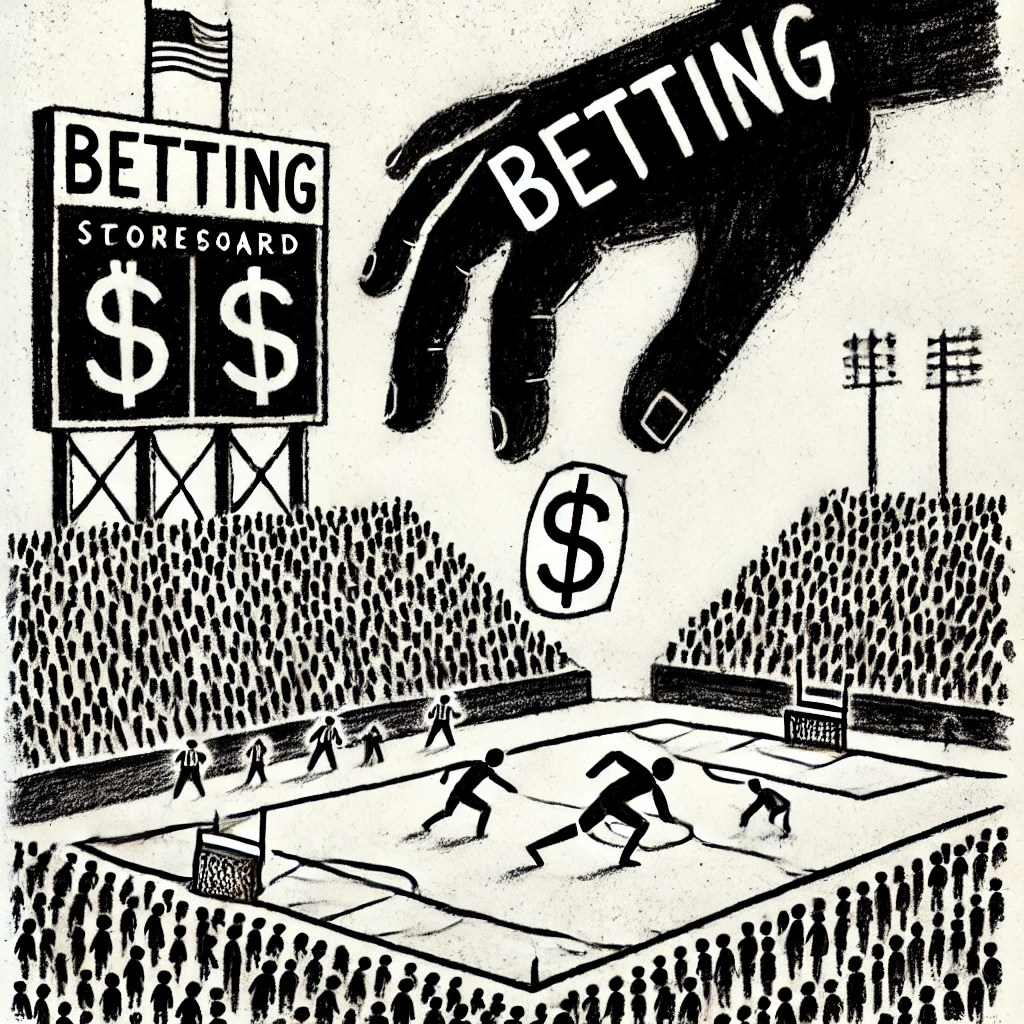
While watching a Boston Celtics game one afternoon, I was stunned when a broadcaster began discussing the gambling odds for the game’s outcome. I turned off the sound immediately. The encroachment of sports betting into the heart of athletic events is no longer an exception—it’s a norm. Consider this: the sports betting industry reported $57.2 billion in handle last year, generating $4.29 billion in revenue. These astronomical numbers didn’t happen overnight.
Until 2018, sports betting was largely banned in the United States, limited to Nevada. That changed when the Supreme Court overturned the Professional and Amateur Sports Protection Act, allowing states to legalize sports gambling at their discretion. Most seized the opportunity, leading to an explosion of legal betting markets.
Sensing a gold mine, the four major professional sports leagues—the NBA, NFL, NHL, and MLB—didn’t just greenlight betting; they embraced it. Leagues now partner with sportsbooks, and TV broadcasts prominently display betting odds during games. Meanwhile, companies like DraftKings, BetMGM, and FanDuel flood the airwaves with ads, portraying gambling as glamorous and almost a guaranteed win. High-profile athletes like Tom Brady and LeBron James star in these campaigns, reinforcing the allure.
The impact? Spectators increasingly wager billions on games they might otherwise watch casually, shifting focus from the action on the court or field to the outcome of their bets. The essence of sports—a celebration of skill, teamwork, and strategy—is being overshadowed by the bottom line.
Regulation lags far behind. States require little more than disclaimers about the legal gambling age (18 or 21) and hotlines for problem gambling. There’s no meaningful oversight of sports betting ads during programming that attracts young viewers, nor restrictions to protect impressionable audiences. These advertisements—often airing during afternoon games like the one I watched—are grooming future gamblers.
The risks extend beyond financial losses. Compulsive gambling, a recognized addiction, can devastate individuals and families. Yet the industry’s influence continues to grow unchecked, embedding itself into the cultural fabric of sports.
In 1959, one of Fidel Castro’s first acts after taking power was shutting down the mob-run gambling casinos in Havana, where profits enriched a few while ordinary Cubans suffered. Gambling had become a one-way street—an exploitative cycle that enriched the powerful while draining the vulnerable. Are we treading a similar path today?
If the game has become more about the bets than the ball, we need to ask: Who really wins?
 Robert Gamer: Author & Activist
Leave a comment