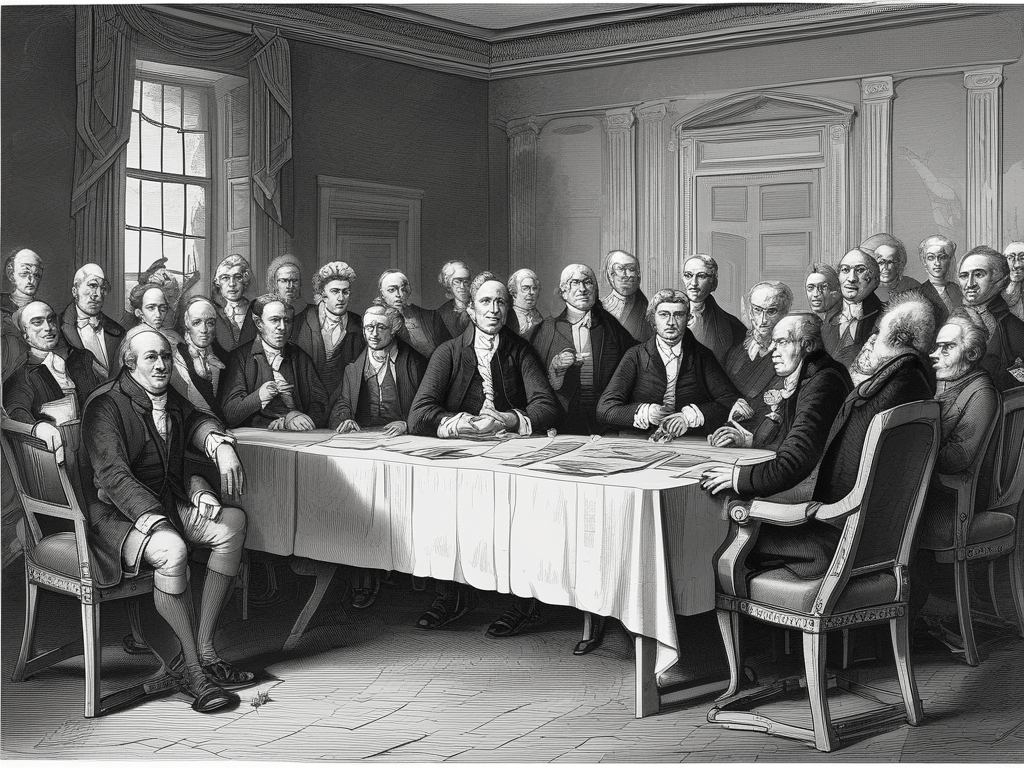
The Declaration of Independence, a document of profound influence and reverence in human history, was crafted by the visionary Thomas Jefferson in 1776. It not only boldly proclaimed America’s independence from British rule but also encapsulated timeless principles of individual rights and governmental legitimacy. While it may be tempting to perceive the Declaration of Independence as written for an exclusive audience, evidence overwhelmingly suggests that its message was intended to resonate universally, transcending borders and generations.
To understand the intended audience of the Declaration of Independence, it is crucial to consider the historical context in which it was written. The American colonies were in a struggle for independence, seeking to break free from British tyranny. As such, it is understandable that the immediate audience for the document was the British monarchy and the colonists themselves. However, the principles enshrined in the Declaration extend far beyond the colonial context, reflecting a broader vision of human rights and self-governance.
One of the most compelling aspects of the Declaration of Independence is its use of universal language. The document asserts that “all men are created equal” and that they possess “unalienable Rights” such as “Life, Liberty, and the pursuit of Happiness.” By employing these inclusive terms, the Founding Fathers made a profound statement that resonates with people of all nations, cultures, and backgrounds. They understood that the principles they were proclaiming were not exclusive to the American colonies but had far-reaching implications for humanity as a whole.
The Declaration of Independence draws heavily from the intellectual currents of the Enlightenment period, grounding its arguments in universal concepts of natural law and social contract theory. Influenced by thinkers like John Locke and Jean-Jacques Rousseau, the Founding Fathers sought to emphasize the inherent rights and freedoms of individuals, regardless of their geographic location or political allegiance. This intellectual depth of the Declaration’s audience extends beyond the American colonies to all those who value human dignity and the pursuit of liberty, making it a profound philosophical document.
The enduring influence of the Declaration of Independence is evident in its resonance with subsequent historical events and documents worldwide. The French Revolution, for instance, drew inspiration from the American Revolution and its ideals of freedom and equality. Additionally, the Universal Declaration of Human Rights, adopted by the United Nations in 1948, echoes the core principles articulated in the Declaration of Independence. This resonance with subsequent historical events reaffirms the document’s intended universal audience, making it a relevant and timeless piece of history.
While the immediate context of the American colonies’ struggle for independence shaped the audience to which the Declaration of Independence was first directed, its underlying principles and universal language transcend this context. The document’s enduring influence, philosophical foundations, and resonance with subsequent historical events demonstrate that its message was meant for a global audience. As an assertion of fundamental human rights and a call for self-governance, the Declaration of Independence stands as a testament to the power of universal ideals and the enduring relevance of its message for all humankind.
 Robert Gamer: Author & Activist
Leave a comment